"Moving your body makes less vulnerable." - Dr. Stephen Porges
Expert Q&A with singer and Orofacial Myologist Jessica Luffey:
“WATCH YOURSELF! There isn’t an athlete alive who doesn't extensively watch their practices and performances.”
Can you tell us about your background and how it has influenced your approach to supporting singers?
Orofacial myology is similar to physical therapy for the face, mouth, and neck. It is most widely used for dental and speech issues, but I became interested in it from a sports angle. I was an opera singer first before starting my myo career; I felt then, and still do, that there is a big deficit of strategic sport-specific instruction in voice. I wanted to train myself and other singers just like other high level athletes- with direct, specific instruction, correct anatomical explanations, and functional-muscular feedback. We all say performing opera is a sport- we need to train like a sport as well!
What are your golden nuggets of wisdom for singers who want to develop their singing?
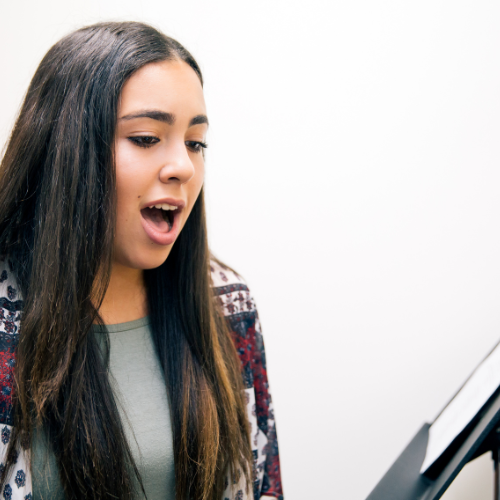
1. WATCH YOURSELF! There isn’t an athlete alive who doesn't extensively watch their practices and performances. I make my students use a mirror every session we’re together. Improvements can happen astounding quickly when people can see their errors in real time!
2. I would also recommend silent work. We singers should be able to fire all the muscles of the pharynx, tongue, soft palate, and breath-support system all without phonating! Just like when you go to the gym, you never start with the 90 lbs dumbbells- working silently teaches and ensures that you have complete control and also prevents fatigue and even injury. If you can’t do it silently- there’s no way you can do it phonating a high C wearing period attire and a wig!
3. Do singing-specific exercises and work outs. ‘Six-pack’ abs aren’t necessary- but singing does require specialized muscular isolation and strength. We singers move and fire muscles in our bodies like no other humans on earth - even yogic breathing is different from our kind of breath support! So, it’s incredibly important to learn and foster the differences between "normal-human" movement and singing movement. I personally do brief tongue, pharynx, soft palate, and body warm-ups before my vocalises every day. And any other athlete will tell you the same thing- they do stretches and other body warmups before their specific sport everyday.
4. Assess yourself for a Tongue Tie. This is my ‘bread and butter’ and it is HUGE. Most people are completely unaware that they are tongue tied. If you have trouble singing closed vowels at the top of your range, transition issues, vocal fatigue, soft palate immobility- even headaches and body tension can all be caused by a tongue tie.
Check out my quick self-assessment here to see if you could be tied and learn more about its effects on singing: https://youtu.be/AKywlBeblXk
What are the most important lessons you have learned about vocal technique and performance?
Vocal technique is really just two things: options and dependability. It seems obvious- but this is so important! Technique is what allows us to have great results every single time. Visualizing is not technique- conscious control and activation is technique. Being able to make a conscious choice that always gives great results is what technique should be. Singers should explore and learn ways to healthily force their bodies to do what is required every time- and I believe that getting out of your head and into your body is the fastest way to do that!
Learn more about Jessica’s work: